The Family-Style Distinction: Assisted Living in Small Elderly Care Homes
Business Name: BeeHive Homes of Bernalillo
Address: 200 Sheriff's Posse Rd, Bernalillo, NM 87004
Phone: (505) 221-6400
BeeHive Homes of Bernalillo
Beehive Homes assisted living care is ideal for those who value their independence but require help with some of the activities of daily living. Residents enjoy 24-hour support, private bedrooms with baths, medication monitoring, home-cooked meals, housekeeping and laundry services, social activities and outings, and daily physical and mental exercise opportunities. Beehive Homes memory care services accommodates the growing number of seniors affected by memory loss and dementia. Beehive Homes offers respite (short-term) care for your loved one should the need arise. Whether help is needed after a surgery or illness, for vacation coverage, or just a break from the routine, respite care provides you peace of mind for any length of stay.
200 Sheriff's Posse Rd, Bernalillo, NM 87004
Business Hours
Families normally begin taking a look at assisted living when life in the house has tipped from "workable with a little bit of help" to "someone could get hurt if we keep going like this." That shift is psychological, not simply logistical. You are not purchasing a product, you are attempting to safeguard both security and dignity.
Most people picture assisted living as a large building with a lobby, an activity calendar posted by the elevator, and long corridors of identical doors. Those neighborhoods can work well for numerous older grownups. Yet over the last 10 to twenty years, a quieter choice has actually grown: small, family-style elderly care homes running in residential neighborhoods, frequently with 4 to 10 residents.
Having dealt with families placing loved ones in both models, I have actually seen the very same concern come up once again and once again: does a small, family-style setting really make a distinction, or is it just a marketing phrase?
The short answer is that it can make an extensive difference, however just when the home is well run and the match is senior care right. The information matter. Let us go through those details with real-world texture rather than slogans.
What "family-style" actually indicates in assisted living
"Family-style" gets utilized so frequently in senior care marketing that it risks losing meaning. In a strong small home, it typically indicates three attributes that change the everyday experience for residents.
First, scale. Instead of 80 to 120 citizens, you might have 6 or 8. That alone shifts nearly everything: how meals work, how staff interact, how quickly someone is seen if they look weak, and how versatile the regimen can be.
Second, environment. These homes are often regular houses that have actually been adjusted for elderly care. Think single story or with a stair lift, broad doorways, grab bars, and an available bathroom, however still a front porch and a backyard. Locals stroll into a living room, not a lobby.
Third, culture. The much better small homes run more like a big extended family than a facility. Personnel frequently cook in the exact same kitchen, share meals at the exact same table, and build long-lasting relationships with locals and households. I have actually seen caregivers who know exactly how Mr. Alvarez likes his coffee and which gospel tune will relax Ms. Johnson throughout sundowning, without checking a chart.
Of course, "family-style" can likewise be utilized to gloss over an absence of expert structure. When you tour any small elderly care home, you should feel both the heat of family and the backbone of a genuine assisted living operation: clear care strategies, medication management, and accountability.
A day in a small elderly care home
It is easier to understand the family-style difference if you visualize a real day.
Morning does not start with a loud overhead statement at 7:00 a.m. Locals typically wake on their own rhythms. A single person might be helped up at 6:30 because he always liked an early start. Another may sleep till 8:30. Care staff work through your house, knocking softly on doors, helping with bathing, brushing teeth, and wearing familiar clothing from each resident's own closet.
Breakfast frequently smells like home. Bacon, oatmeal, or eggs cooking in the kitchen area perform the spaces. Residents drift toward the table or, if required, are wheeled there. No one is swiping meal cards or standing in buffet lines. Personnel understand who chooses a small part and who will request seconds.
Late morning may include easy activities: a puzzle at the kitchen table, folding towels, tending plants, or sitting on the deck if the weather cooperates. In larger assisted living communities, activities can feel more structured and sometimes theatrical, which some citizens enjoy. In small homes, engagement looks more like daily life. The caregiver might do a light exercise routine with 2 people in the living room, while another resident views the birds through the window and comments on each one.
Afternoons often slow down, and that is by style. Numerous older adults have actually restricted stamina. After lunch, several homeowners nap in their own spaces. Personnel use this time for peaceful care jobs: filling up materials, completing documentation, and preparing for the night. If somebody wakes confused or nervous, they are not roaming down a long corridor to find help. They open their door and they are almost immediately noticeable to staff.
Dinner might be a shared meal with a visiting family member pulling up a chair. In great homes, personnel involve citizens in small, significant contributions: stirring a bowl, choosing which vegetables to serve, or setting spoons on the table. Those are not simply "activities" however methods to protect autonomy.
At night, the family-style difference becomes specifically tangible. In bigger neighborhoods, staffing frequently drops and caregivers cover an entire wing. In a small care home with, say, 6 homeowners, it is possible to have a couple of staff on responsibility who can hear someone call out. Nighttime bathroom trips are much shorter and much safer, since the range from bed to restroom is literally a couple of steps, and support is close.
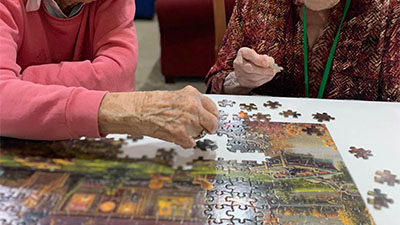
Daily life in these homes can feel less like an arranged program and more like life unfolding in a safe, carefully structured household.
Assisted living: small vs big communities
Families sometimes frame the option as "intimate care vs more services," and there is some fact because. The trade-off is not absolute, though, and great small homes increasingly provide robust services.
Here is an easy comparison that shows what I have observed throughout numerous placements:
- Environment: Small homes feel residential, with familiar furnishings and home-style cooking areas. Larger assisted living neighborhoods feel more like a hotel or campus, with public areas and clear separation in between "staff" and "citizens."
- Relationships: In a small home, locals and caretakers frequently understand each other deeply. Turnover still takes place, however connection is more powerful. In large neighborhoods, locals may connect with many more individuals, which can be stimulating for some and overwhelming for others.
- Flexibility: Small homes can change regimens rapidly. If a resident starts sleeping later, personnel merely adapt. In larger settings, change sometimes moves slower due to the fact that policies must work for dozens of homeowners at once.
- Amenities: Big communities generally win on features: fitness spaces, beauty salons, several activity areas. Small homes generally concentrate on core assisted living and elderly care services instead of extras.
- Clinical depth: Some big assisted living campuses have nurses on site 24/7 and treatment centers within the structure. Small homes differ extensively. Some agreement with home health and hospice to bring services on site; others rely mainly on caretakers and off-site medical visits.
The ideal option depends less on abstract functions and more on the specific person. A highly social 78-year-old who enjoys occasions might prosper in a larger senior care community. An 89-year-old with moderate dementia who gets distressed in crowds might settle magnificently into a quieter, small elderly care home.
Safety, staffing, and real-world risk
No family wishes to discover that "home-like" implies "informal" in the wrong methods. Quality small homes combine heat with rigorous attention to safety, staffing, and care protocols.
Staffing ratios are a great starting point, but they are not the entire story. In a small home, an apparently low ratio like one caregiver for every 3 or 4 residents can be effective due to the fact that exposure is so high. A team member seated at the kitchen area table can see down the corridor and into the living area at the same time. There are fewer blind areas. If a resident starts to stand from a chair unsteadily, assistance is just a couple of steps away.
In contrast, a big building might have a solid ratio on paper but still struggle with postponed response times if caretakers are spread out across long corridors or several floorings. I remember one household who moved their father from a large assisted living structure to a 7-bed home after duplicated falls in his bathroom that nobody heard. In the smaller home, simply having the restroom 10 feet from the common location, with staff near, cut his falls dramatically.
Medication management is frequently tighter in well-run small homes due to the fact that just a handful of locals are on the schedule. The caregiver or med tech understands exactly who takes what at 8 a.m., 2 p.m., and bedtime. Errors can still take place, which is why you need to always ask to see the medication administration procedure throughout a tour. However the intimacy can work in favor of safety.
Of course, small size does not automatically equivalent safe. Red flags consist of:
Caregivers seeming rushed since one person is covering too many locals, specifically throughout peak times like mornings.
Lack of clear documents about care strategies, falls, or modifications in condition.
No noticeable system for medication tracking, such as a MAR (medication administration record) or blister packs.
Strong small homes often work closely with going to nurses, doctors, home health, and hospice providers. They might arrange regular visits on website to manage chronic conditions, evaluation medications, and monitor skin integrity or weight. This hybrid model, mixing assisted living support with external medical services, can work well and keep homeowners steady longer.
The emotional truth: belonging vs institutional feel
On paper, households examine prices, care levels, and personnel qualifications. In practice, the emotional "fit" frequently identifies whether a placement thrives.
Many older grownups who resisted traditional assisted living have actually accepted a relocate to a small elderly care home since it feels like a house, not a center. They can sit at the kitchen counter and chat while someone cooks. They can step into the yard and odor real grass. The visual hints state "home," not "institution," and that alleviates the mental blow of leaving one's own residence.
That said, not everybody desires a small, tight-knit environment. Some homeowners choose the privacy of a larger senior care neighborhood, where they can join activities when they pick and pull away to their house without sensation observed. In a small home, privacy needs to be secured intentionally, because the scale welcomes constant interaction. Search for homes that:
Respect closed doors as private area unless there is a security concern.
Offer small nooks or peaceful areas where a resident can check out, listen to music, or enjoy a show without constant chatter.
Balance family-style meals with flexibility, such as allowing a resident to consume in their space sometimes when they feel unhealthy or just tired.
The emotional tone of the home typically reflects the leadership. If the owner or supervisor speaks respectfully of locals, concentrates on their strengths, and coaches staff to do the same, you usually feel that in the environment practically immediately.
Respite care in a small home: a trial run that matters
One of the concealed strengths of small assisted living homes is how well they can supply respite care for brief stays. Family caregivers typically strike a point where they need a week or 2 to recover, travel, or address their own health. A small home can provide a momentary bed, with complete elderly care services, without the overwhelm of a large building.
Short-term respite remains serve 2 functions. First, they give the primary caregiver a genuine break, which can hold off long-term placement and minimize burnout. Second, they work as a low-stakes trial for the older adult. You can see how they adapt to having aid with bathing, dressing, and medications, and how they respond to the social environment.
I remember a child who brought her mother, living with moderate dementia, into a small home for a 10-day respite while she went through surgery herself. The mother was determined that this was "just for while my child has to rest." Those 10 days were enough for her to experience the sensation of not being alone at night, of having somebody nearby if she woke puzzled. 6 months later, when a move was plainly needed, she picked that exact same home without resistance and explained it as "the place where they understand how to make my tea."
When evaluating respite care in a small home, ask whether the services and staffing are truly the same as for long-term residents. A well-run home ought to not downgrade care just because the stay is brief. Respite should feel like a sensible glimpse of life there.
Questions to ask when visiting a small elderly care home
Families frequently inform me they feel overwhelmed by what to ask, specifically if they are visiting several alternatives. A focused set of concerns helps you look past the fresh paint and friendly smiles.
Here is a succinct checklist to bring with you:
- "Who owns this home, and how frequently are they on website?" Direct owner involvement can be a strength if it includes accountability, not micromanagement.
- "What is your common staffing pattern, by time of day?" Listen for specifics: the number of caretakers at 7 a.m., 3 p.m., and overnight.
- "Tell me about the last time a resident's health altered quickly. What took place and how did you respond?" Real stories reveal the true process.
- "How do you manage medical appointments, emergencies, and healthcare facility discharges?" You need to know who coordinates, who transports, and how communication flows.
- "Can I talk with an existing resident's household?" Referrals matter, particularly in small homes where online evaluations may be sparse.
Pay attention not only to the material of the answers, however also to how comfortable personnel appear discussing less-than-perfect scenarios. A mature operation acknowledges that falls, hospitalizations, and behavioral challenges occur in senior care, and it describes its technique clearly.
Who flourishes in a family-style home, and who may not
Not every older grownup is a perfect match for a cottage model, and that is not a failure of the design. It is simply a matter of fit.
People who tend to do well consist of those with:
Mild to moderate dementia who are soothed by routine, familiar environments, and a small circle of people.
Mobility obstacles that make browsing big buildings difficult, such as those utilizing walkers or wheelchairs who tire quickly.
A long history of valuing home life over crowds and official events.
A strong need for peace of mind and close relationships with caregivers.
On the other hand, you may favor a bigger assisted living community if your relative:
Is extremely social and delights in a wide range of structured activities, from lectures to big musical performances.
Is younger or more physically active and wants a health club, walking paths, or arranged trips a number of times per week.
Needs access to on-site clinical services at all hours, such as a nurse who can handle intricate medical equipment or regular knowledgeable interventions.
Another edge case involves behavioral symptoms. Some small homes are outstanding with locals who roam, call out often, or have periodic agitation, since the setting is predictable and personnel understand them well. Others are not geared up to handle these situations safely. Ask directly what behaviors they can and can not manage, and what would trigger a request for discharge.
How to check out the subtle indications throughout a visit
Beyond formal questions, some of the most crucial information comes from what you observe, not what you are told.
Watch how staff talk to residents. Do they lean down to eye level, usage names, and wait on reactions? Or do they discuss locals as if they are not provide? One quiet but effective sign is whether personnel acknowledge nonverbal hints, such as using a blanket when someone shivers or a rest when someone looks tired however states they are "fine."
Look at the rhythm of your house. Is everybody lined up in front of a television, or are there small clusters of different activities? You do not need a constantly buzzing environment, but a total absence of engagement can be a warning.
Glance into restrooms and around corners. Cleanliness in the less noticeable areas states more than the front space. Odors in elderly care settings can occur, especially after a recent accident, however persistent smells of urine usually show insufficient cleaning or incontinence management.
Notice whether citizens appear groomed in manner ins which match their history. A guy who always wore slacks now in stained sweatpants may indicate an inequality between the home's design and his identity, or just staffing that is cutting corners on individual care. For a female who always enjoyed her hair set, seeing her hair brushed and pinned back nicely can be a sign that the personnel focus on individual preferences.
Most of all, try to picture your loved one waking up there, shuffling into the cooking area, hearing familiar voices. Does the image feel manageable, even somewhat comforting? Or does it make your stomach clench? Your own instincts, notified by careful observation, are a useful tool.
Cost, openness, and what families frequently miss
Financially, small homes can be similar in expense to traditional assisted living, however the structure of costs might vary. Some charge a flat rate that consists of most care requirements, while others utilize a tiered system that increases as care requirements grow. Since these homes are often separately owned, there can be more flexibility in personalizing a strategy, but likewise more variation in how costs are communicated.
Ask for a composed breakdown of what is consisted of and what sets off surcharges. Help with bathing, dressing, toileting, and medications ought to be clearly defined. If your loved one currently requires hands-on help several times a day, press for specifics: how many helps daily are included, and what happens if those needs double?
Families likewise undervalue the emotional cost of moving repeatedly. One benefit of some small homes is their ability to support residents all the method through end of life, in collaboration with hospice services. Others are less geared up for late-stage care and may require a transfer to a skilled nursing center when requires increase.
Clarify:
Whether they have supported locals through end of life formerly, and how that worked.
What types of medical equipment they can accommodate, such as oxygen, health center beds, or feeding tubes.
Their policy on medical facility readmissions. Some homes can take locals back quickly after a hospital stay; others might think twice if needs escalated.
The less disruptive relocations your loved one experiences, the much better their stability, specifically when dementia is involved.
Choosing with clearness, not guilt
When households stand at this crossroads, regret often shadows every choice: guilt about "putting Mom in a home," guilt about not having the ability to supply 24/7 care personally, or regret about thinking about financial limitations. That regret can distort judgment and make you susceptible to polished marketing.
Small, family-style elderly care homes are not a magical answer. They can, however, offer a gentle, human-scale option that respects both safety and uniqueness, particularly for those who discover larger structures disorienting or impersonal.
The course forward is to integrate your intimate understanding of your loved one with clear-eyed assessment of each choice. Visit more than when, at different times of day. Usage respite care if you can to evaluate the waters. Ask hard questions, and listen to how they are answered. Notification how you feel ignoring the house.
Assisted living, at its finest, is not about warehousing older adults. It has to do with developing a small, sturdy community around them when the initial household structure can no longer carry the full load. In a well-run small elderly care home, that neighborhood can look and feel a lot like family, with all the ordinary rhythms of shared meals, familiar voices, and the peaceful self-confidence that somebody is nearby if help is needed.
BeeHive Homes of Bernalillo provides assisted living care
BeeHive Homes of Bernalillo provides memory care services
BeeHive Homes of Bernalillo provides respite care services
BeeHive Homes of Bernalillo supports assistance with bathing and grooming
BeeHive Homes of Bernalillo offers private bedrooms with private bathrooms
BeeHive Homes of Bernalillo provides medication monitoring and documentation
BeeHive Homes of Bernalillo serves dietitian-approved meals
BeeHive Homes of Bernalillo provides housekeeping services
BeeHive Homes of Bernalillo provides laundry services
BeeHive Homes of Bernalillo offers community dining and social engagement activities
BeeHive Homes of Bernalillo features life enrichment activities
BeeHive Homes of Bernalillo supports personal care assistance during meals and daily routines
BeeHive Homes of Bernalillo promotes frequent physical and mental exercise opportunities
BeeHive Homes of Bernalillo provides a home-like residential environment
BeeHive Homes of Bernalillo creates customized care plans as residents’ needs change
BeeHive Homes of Bernalillo assesses individual resident care needs
BeeHive Homes of Bernalillo accepts private pay and long-term care insurance
BeeHive Homes of Bernalillo assists qualified veterans with Aid and Attendance benefits
BeeHive Homes of Bernalillo encourages meaningful resident-to-staff relationships
BeeHive Homes of Bernalillo delivers compassionate, attentive senior care focused on dignity and comfort
BeeHive Homes of Bernalillo has a phone number of (505) 221-6400
BeeHive Homes of Bernalillo has an address of 200 Sheriff's Posse Rd, Bernalillo, NM 87004
BeeHive Homes of Bernalillo has a website https://beehivehomes.com/locations/bernalillo/
BeeHive Homes of Bernalillo has Google Maps listing https://maps.app.goo.gl/QSaz3dwMGDj1Ev9a8
BeeHive Homes of Bernalillo has Instagram page https://www.instagram.com/beehivehomesbernalillo/
BeeHive Homes of Bernalillo has an YouTube page https://www.youtube.com/@WelcomeHomeBeeHiveHomes
BeeHive Homes of Bernalillo won Top Assisted Living Homes 2025
BeeHive Homes of Bernalillo earned Best Customer Service Award 2024
BeeHive Homes of Bernalillo placed 1st for Senior Living Communities 2025
People Also Ask about BeeHive Homes of Bernalillo
What is BeeHive Homes of Bernalillo Living monthly room rate?
The rate depends on the level of care that is needed. We do a pre-admission evaluation for each resident to determine the level of care needed. The monthly rate is based on this evaluation. There are no hidden costs or fees
Can residents stay in BeeHive Homes until the end of their life?
Usually yes. There are exceptions, such as when there are safety issues with the resident, or they need 24 hour skilled nursing services
Do we have a nurse on staff?
No, but each BeeHive Home has a consulting Nurse available 24 – 7. if nursing services are needed, a doctor can order home health to come into the home
What are BeeHive Homes’ visiting hours?
Visiting hours are adjusted to accommodate the families and the resident’s needs… just not too early or too late
Do we have couple’s rooms available?
Yes, each home has rooms designed to accommodate couples. Please ask about the availability of these rooms
Where is BeeHive Homes of Bernalillo located?
BeeHive Homes of Bernalillo is conveniently located at 200 Sheriff's Posse Rd, Bernalillo, NM 87004. You can easily find directions on Google Maps or call at (505) 221-6400 Monday through Sunday 9:00am to 5:00pm
How can I contact BeeHive Homes of Bernalillo?
You can contact BeeHive Homes of Bernalillo by phone at: (505) 221-6400, visit their website at https://beehivehomes.com/locations/bernalillo/ or connect on social media via Instagram Facebook or YouTube
Residents may take a trip to the Abuelita's New Mexican Kitchen . Abuelita’s offers comforting New Mexican dishes that assisted living and elderly care residents can enjoy during senior care and respite care dining outings.